Mara Sânziana Urcan / Diploma project / Târgu Mureș

Birth Centre

A place for birth. An infrastructure for care.

Discover the project ↓
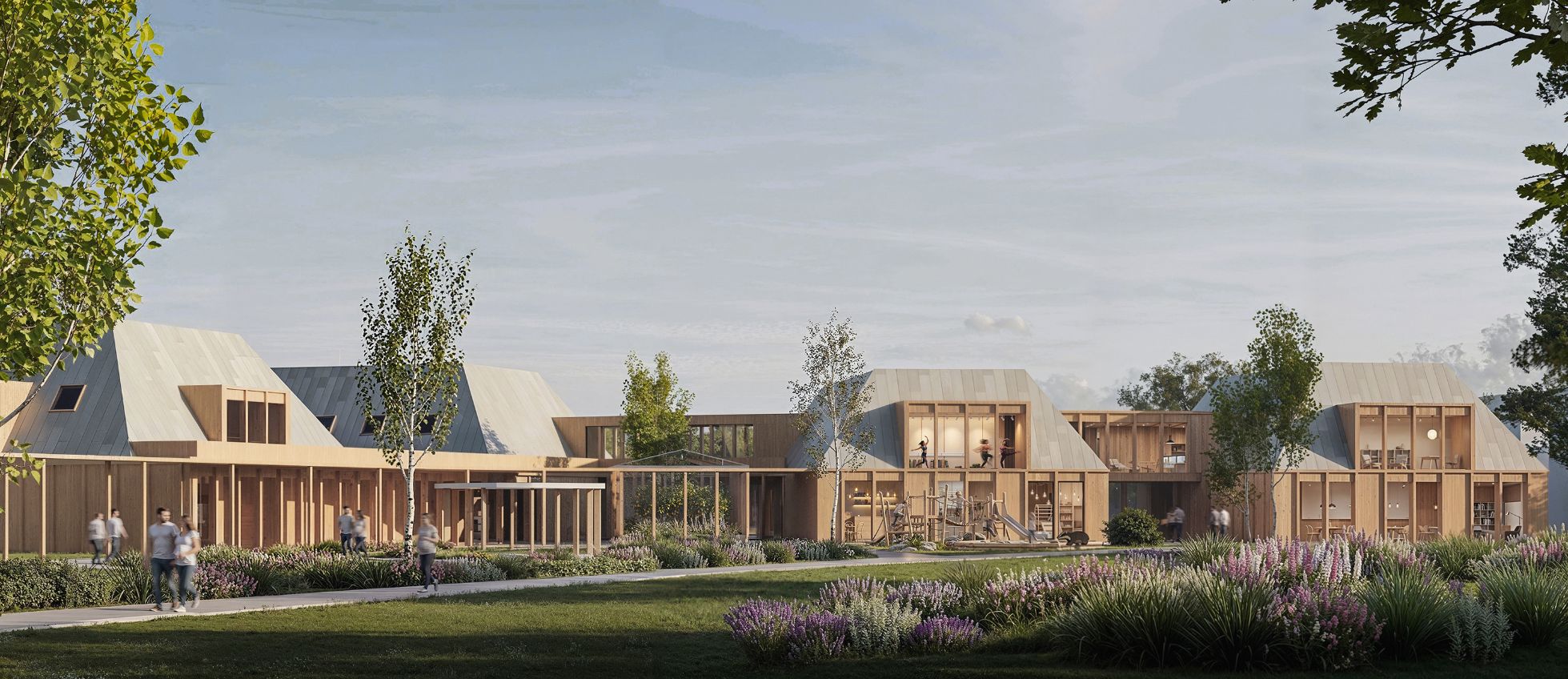
The Birth Centre and its gardens in daylight.
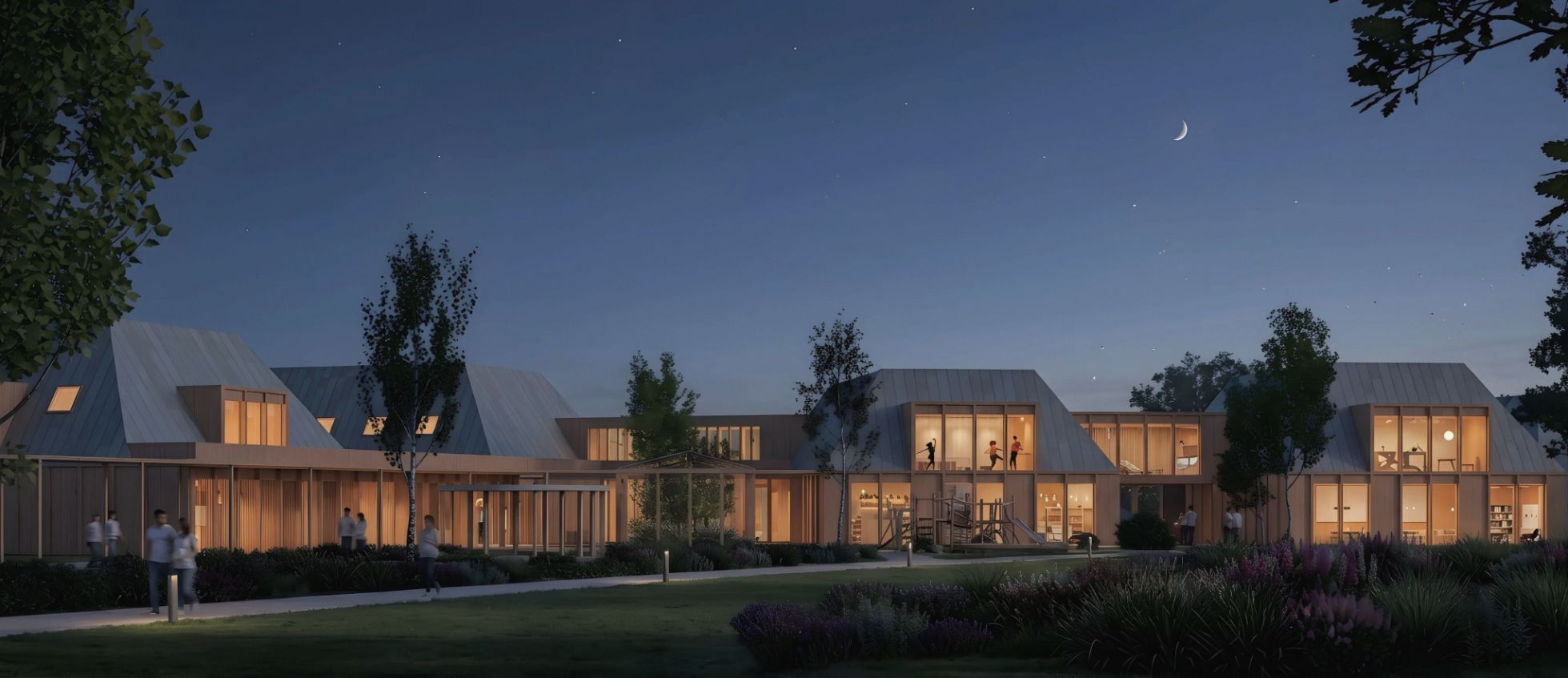
The same view at night, with warm light inside the rooms.
DayNight

Two views of the same place. Move the slider to compare.

Maternal care, reproductive education and midwifery training2026
01 / The premise

Why a
birth centre?

The way we welcome a life should also care for the person giving birth.

01 / A different beginning

Space for birth
Space for choice

The proposal at the scale of one roomPresentation / 11

A birth centre gives eligible low-risk births a dedicated setting, with midwives at the heart of care and a planned connection to specialist services. [WHO]

01

Before

Information, preparation and a familiar care team.

02

During

Privacy, movement and informed decisions.

03

After

Recovery, feeding support and continued contact.

Read more: continuity and eligibility

WHO’s midwifery model connects pregnancy, birth and the weeks after birth through a known midwife or small team. The Birth Centre gives that continuity a spatial home.

The care model would require agreed eligibility criteria, qualified staffing, multidisciplinary support and transfer protocols. Room design supports that work alongside clinical practice.
02 / Why Romania?

A future built
on trust

A broader role for midwives in the research modelPresentation / 02

Original drawing with Romanian labels. A translated key accompanies this view.

Continuity of careCommunity supportEducation and preventionBirth care

The project began with exposure to a different model of care in Toronto. The research asks what continuity, prevention and community support could mean in Romania.

1966–1989 / Historical context

Reproductive freedom and trust

Under communism, restrictions on abortion and contraception placed reproduction under state control. Maternal deaths rose sharply. That history belongs in the discussion of trust and reproductive freedom. [History]

AI-generated charcoal reproduction based on the AGERPRES photograph of Caritas Hospital, 16 March 1989, published in Libertatea.

Based on: Libertatea / Jurnalul Decretului ↗

6.6‰
Romania / 2024 / infant mortality

Before the first birthday

Deaths before age one per 1,000 live births. Romania had the highest rate in the EU in 2024. [Eurostat]

What this measure tells us

This includes the entire first year of life. A birth centre’s contribution would need evaluation alongside wider access, social and health services.

51.4%
Romania / 2023 / caesarean births

Appropriate care and informed choice

The share of all births performed by caesarean, as compiled by Oxford’s NPEU. [NPEU]

Read the figure in context

The aim is appropriate care and informed choice. Necessary caesareans remain essential; this figure alone does not identify unnecessary procedures.

1 in 3
Snoop / voluntary testimonies

The experience of birth matters

respondents to Snoop’s call for testimonies described birth as traumatic. [Snoop]

684 voluntary testimonies. This is not a national prevalence estimate.

Consent and respectful care

34.9% — Among AMI’s respondents who had a vaginal birth in a public hospital: 613 of 1,754 women. One reported form of obstetric violence, not an overall national abuse rate. [AMI, 2024]

The project’s ambition is to support healing through dignity, informed choice and access to support. Architecture can help create those conditions; it cannot erase trauma on its own.

Reception / a first point of contactPresentation / 11

A place to ask and prepare

Antenatal education, birth planning and postpartum support become part of the programme. A welcoming reception gives these services a visible point of contact.

Education and professional training

Classrooms, practice and community

Classrooms for midwifery education. Dedicated teaching spaces support university training, seminars and discussion of care, consent and the physiology of birth.

Hands-on training. Simulation and supervised practical sessions connect theory with clinical skills, communication and teamwork. The relationship with care spaces creates opportunities to observe, practise and reflect within an agreed supervision framework.

Education with the community. Workshops, antenatal classes and small-group conversations bring women, families, students and care professionals together. Shared spaces encourage questions, exchange of experiences and mutual support before and after birth.

A profession needs a place to practise

The pilot proposes clinical roles, supervised learning and continuity of care for midwives. Education needs real opportunities for professional practice.

Workforce figures and the European context

Snoop reports approximately 700 active midwives, citing the Romanian midwives’ association. This workforce estimate differs from broader statistical categories. The pilot proposes paid clinical roles, supervised learning and continuity of care. [Snoop]

The presentation lists 933 midwives for 2024. That figure and the approximately 700 active midwives cited by Snoop need aligned definitions before they can form a comparative chart.

A 2024 European Parliament study examines obstetric violence, legal frameworks and education for prevention. This project responds through a proposed programme of informed consent, accessible education and feedback. It is a design response to that policy discussion, not an EU-mandated birth-centre programme. [European Parliament]

03 / Why Târgu Mureș?

A local place
A wider possibility

Târgu Mureș in the project’s regional argumentPresentation / 04

The medical university and the proposed hospital relationship make this a place to explore connections between clinical practice, teaching and community care. [UMFST]

The lines describe the project’s proposed network, not existing referral routes. Academic and clinical partnerships would need agreement.

Explore the site ↗
04 / Why beside the County Hospital?

Autonomy in care
Connection when needed

The architectural care gradientPresentation / 08

Original drawing with Romanian labels. A translated key accompanies this view.

ClinicalTransitionBirth and careLearning and nature

A calmer environment for low-risk birth remains connected to specialist care. Proximity creates an opportunity; agreed staffing and transfer systems make the relationship work.

What must be agreed

The proposal pairs a calmer setting for eligible low-risk births with planned access to obstetric and neonatal expertise. Clinical eligibility, staffing, receiving services and transfer routes must be agreed and tested. Being next door alone does not establish safety.

Diagram of the intended care relationship, not a verified operational pathway or transfer-time claim. The site proposal does not establish that all required hospital services are immediately adjacent.

05 / Why a pilot?

One place to begin
Evidence to go further

One programme, several opportunities for carePresentation / 07

Original drawing with Romanian labels. A translated key accompanies this view.

Birth and maternityCommunity and educationMidwifery trainingGardens

The pilot creates a setting for care and learning, then asks what its actual experience can teach us. Safety, consent, access, transfers and workforce development would all need evaluation.

CreateEvaluateInform policy
A longer-term horizon

A successful pilot could inform debate about midwife-led units, community care and, eventually, regulated midwife-led home birth. Each setting requires its own evidence, eligibility criteria, professional framework and reliable emergency integration.

Future ambition, not an existing service or promised policy outcome.

Sources and research notes

Research checked 29 September 2026. The statistics below retain their original observation years. Local programme and policy pathways are project proposals. Storytelling reference: Snoop; text and layout here are original.

  1. Snoop · Birth in Romania — A national crisis ↗

    Narrative reference; 684 voluntarily submitted testimonies, not a nationally representative survey.

  2. AMI · Research report on obstetric violence, 2024 ↗

    5,623 respondents. Consent figure: Table 11, PDF page 67; vaginal births in public hospitals, n = 1,754.

  3. Eurostat · Infant mortality, 2024 data ↗

    Deaths before age one per 1,000 live births. A population indicator, not a measure of birth-centre performance.

  4. Oxford NPEU · International caesarean rates, June 2026 ↗

    Romania: 51.4% in 2023. Publication date and observation year differ.

  5. BMJ · Romanian women’s struggle to manage their fertility, 2013 ↗

    Historical account of reproductive restrictions and maternal mortality during 1966–1989.

  6. WHO · Expanding midwifery models of care, 2025 ↗

    Continuity, education, autonomous practice and integration with multidisciplinary care.

  7. European Parliament · Study on obstetric and gynaecological violence, 2024 ↗

    European policy context: prevalence, legal frameworks and prevention through education. A study, not a Romanian implementation mandate.

  8. UMFST · Study programmes ↗

    Local medical education context. No partnership with this proposed pilot is implied.

02 / The system

Care needs a place
to grow

The proposal connects the places where people receive care with the places where midwives learn and practise.

01

Infrastructure

Spaces that welcome physiological birth and support timely referral.

02

Care and education

Information and support before birth, with continuity afterwards.

03

Professional practice

Clinical roles and supervised experience for midwives.

04

Learning and feedback

Experience from the pilot can inform training and future service design.

Proposed relationships to be tested through the pilot. The sequence describes the project’s programme, not a proven causal effect on clinical outcomes.

The programme in one drawingPresentation / 07

Original drawing with Romanian labels. A translated key accompanies this view.

A place for birth and recovery

The pink volumes gather the birth and maternity programme. Their gardens extend the everyday space of care outdoors.

Read more: the systemic problem
Research framing from the presentationPresentation / 03

Original drawing with Romanian labels. A translated key accompanies this view.

The diagram frames interconnected gaps in care, education, professional roles and employment. Its arrows express the research argument; they do not by themselves establish clinical causation.

InfrastructureReproductive educationMidwives’ roles and jobsTraining opportunities
03 / The site

From the country
to the garden

Each change of scale explains a different part of the architectural choice.

Regional context / proposed relationshipsPresentation / 04

01 / 04A place in Romania

01

A place in Romania

The regional research locates Târgu Mureș within a wider conversation about care and education. The network lines express the project’s ambition.

Regional context / proposed relationshipsPresentation / 04
Next scene ↓
02

The medical city

Move closer to the urban context: existing medical infrastructure, access routes and the landscape edge form the setting for the proposal.

The city scalePresentation / 04
Next scene ↓
03

Between hospital and forest

The site’s aerial view makes the neighbouring landscape visible. The red outline marks the area studied in the presentation.

Presentation labels: UMFST campus and Platoul Cornești.

The site in its landscapePresentation / 05
Next scene ↓
04

A connected ground

The masterplan gathers smaller buildings around paths, courtyards and gardens. Outdoor space becomes part of the programme of care.

The proposed masterplanPresentation / 07
The site evolves

Four steps towards
a connected place

The presentation’s sequence can be read one stage at a time. Open any drawing to see the complete original.

Four stages from the original presentationPresentation / 06

01 / 04Reorganise

01

Reorganise

Begin with the existing medical setting and reconsider the relationship between access, buildings and open space.

Four stages from the original presentationPresentation / 06
Next scene ↓
02

Connect care

Introduce a continuous relationship between the hospital context and the proposed spaces of care.

Four stages from the original presentationPresentation / 06
Next scene ↓
03

Connect learning

Extend the programme towards education and professional practice, with smaller linked volumes.

Four stages from the original presentationPresentation / 06
Next scene ↓
04

Open to the landscape

Complete the proposal with gardens and pedestrian links towards the forest edge.

Four stages from the original presentationPresentation / 06
Outdoor care

Several gardens
Several ways to pause

Private labour gardens, shared outdoor spaces and planting give the landscape different roles throughout the programme.

Labour gardenMeditation gardenSensory gardenGreenhouse and play
Different spaces within one landscapePresentation / 07

Original drawing with Romanian labels. A translated key accompanies this view.

04 / The experience

An arrival
at a human scale

Follow a spatial journey from clinical connection to a room and its garden. Each scene has its own image and a short explanation.

A gradient of carePresentation / 08

01 / 04Clinical connection

01

Clinical connection

The journey begins within a medical context. The proposal keeps a planned relationship to specialist care while introducing a different spatial scale.

Clinical / transition / birth and care / learning / nature.

A gradient of carePresentation / 08
Next scene ↓
02

A softer threshold

A covered timber route brings the building closer to the scale of walking, shelter and the garden. The threshold becomes a place to slow down.

Covered route / courtyardPresentation / 18
Next scene ↓
03

A welcome

Reception offers a clear first point of contact. Daylight and a view towards planting introduce the centre through an everyday, domestic atmosphere.

ReceptionPresentation / 11
Next scene ↓
04

A room of one’s own

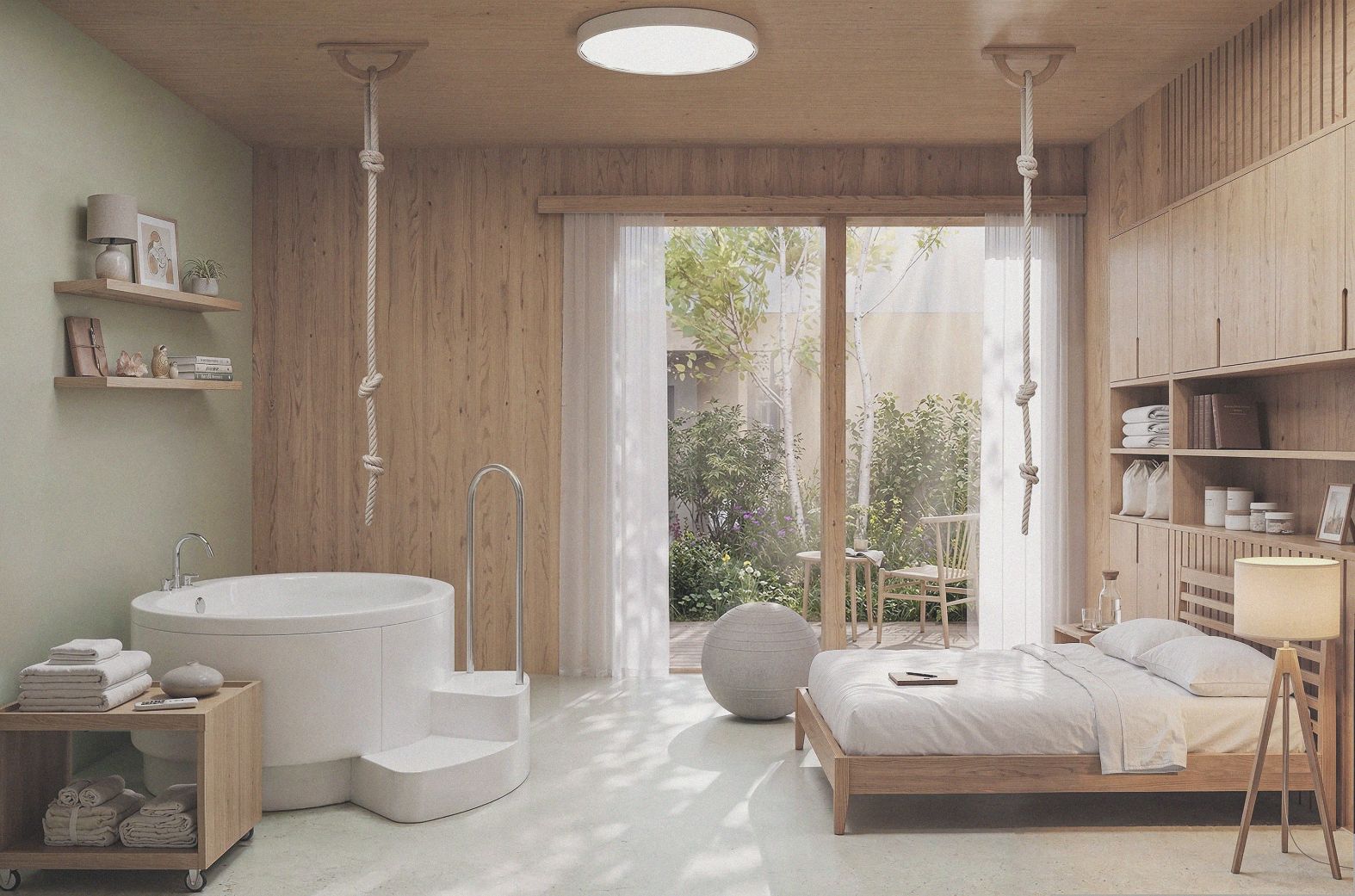
A bed, a tub, space to move and a private garden offer several ways to inhabit the birth room. Care is present within a familiar spatial language.

The birth suitePresentation / 11

Sound layer to be supplied: recorded corridor ambience, footsteps beneath the timber canopy, quiet room tone and garden sounds. The current experience is visual.

05 / Inside the birth room

One room
Many ways to feel at ease

Explore four design choices in the original room render. Select a numbered point or its label below.

Birth room with a tub on the left, floor space in the centre, a bed on the right and a private garden beyond.

Privacy

A defined room and controlled access create a private setting. Timber finishes and discreet storage reduce the visual presence of equipment.

Original project render / presentation slide 11. The points explain spatial intentions; they do not promise particular clinical outcomes.

Read the room in plan

The room continues
into the garden

The plan makes the relationship between movement, equipment, privacy and outdoor access explicit. Open it to examine the original drawing.

Discreet medical equipmentPrivacy screenBirthing tubPrivate labour garden
Further design principles

The brief also includes space for a chosen companion, acoustic comfort, adjustable temperature and discreet access to clinical equipment. Staffing and care protocols remain part of the wider model.

Birth suite / original planPresentation / 10

Original drawing with Romanian labels. A translated key accompanies this view.

06 / The architecture

A collection of spaces
for everyday care

Smaller volumes, covered routes and gardens connect the centre at a familiar scale. Drawings and renders explain the same proposal in different ways.

A domestic scale within medical infrastructurePresentation / 16
Massing and connections

A building that
makes room for gardens

The axonometric view shows how the volumes gather around open space. Covered links keep the programme connected while the gardens give each part its own setting.

Linked volumesCourtyardsPaths and planting
The building in its sitePresentation / 07
Explore the drawings

Read the programme
one level at a time

Birth and care spaces organised around courtyards, gardens and circulation.

Ground floor / original project drawingPresentation / 09

Original drawing with Romanian labels. A translated key accompanies this view.

Select a floor, then open its drawing for fullscreen viewing. Use + / − to zoom and scroll to inspect details.

Structure and material

The spaces have
a construction logic

The exploded axonometric drawing explains how the structural layers and roof fit together. Open it to follow the original technical annotations.

Roof layersTimber framingGround and foundation
Exploded construction axonometryPresentation / 14

Original drawing with Romanian labels. A translated key accompanies this view.

Sections and elevations

Light, roof and scale

The sections connect internal space with the external profile. The elevations show how the repeated roof forms give the centre a smaller, familiar rhythm.

Section and elevation / original project drawingPresentation / 15

Original drawing with Romanian labels. A translated key accompanies this view.

Further elevations and sections
Additional technical viewsPresentation / 17

Original drawing with Romanian labels. A translated key accompanies this view.

07 / A beginning

A place to give birth
A place to rethink care

The pilot offers an architectural setting for a different conversation about birth in Romania. What follows would be built through care, practice and evidence.

The courtyard / a place to pausePresentation / 18
08 / Contact and portfolio

Continue the conversation

Mara Sânziana Urcan

Explore my full portfolio and get in touch through my studio website.

Visit my full portfolio ↗
09 / Acknowledgements

Special thanks

Guidance and collaboration

Faculty of Architecture and Urban Planning

Architecture supervisor
Dr. arh. Endre Vanyolos
Structural consultant
Conf. dr. ing. Imola Kirizsan
Web design, tech consultant, 3D printing
Adrian Cheoreanu ↗
Internship advisor
Cristina Podariu

The first idea

Gale Beth Goldberg

Your thesis sparked my first idea that a birth centre is needed and could be piloted in Romania.

Interviews

Midwives and doctors

Emoke Donath, Adina Iancu, Jocelyn Lowe, Saskia Vargas Garcia, Nimfa Adorjani

Thank you for your irreplaceable work and for informing the design.

Mothers, women and advisors

Renata, Simona, Anca, Diana, Andra, Michele, Maria, Silvia

Thank you for sharing your experiences, care and wisdom, and for supporting this project.

My parents

Ovidiu & Renata

For having me, raising me, and sustaining my project with all the comforts, motivation and love.

Visits, tours and on-location research

  • Toronto Birth Centre
  • Atwell Centre, Oakville
  • Târgu Mureș County HospitalThe first maternity I visited
Optional design and production notes

Original material and visual requests

Architectural imagery comes from the supplied presentation. The historical-context illustration is an AI-generated charcoal reproduction based on the AGERPRES photograph published in Libertatea. The reception render is identified as reception.

  • Historical illustration: charcoal reproduction based on the Caritas Hospital photograph, 16 March 1989. Original photograph: AGERPRES, via Libertatea.
  • Midwifery education is described through classrooms, supervised practical training and community education.
  • Sound: original or licensed recordings for the corridor, canopy, room and garden.

Future motion direction

Use the supplied geometry as the source of truth. Animate programme colours, annotations and connections without changing the building or site. Keep captions, years and source definitions attached to evidence. Future policy paths remain labelled as ambitions.

Drawing labels remain part of the original Romanian artwork. English explanations accompany them. Clean unlabelled drawings or editable diagrams would allow fully translated annotations later.

Image viewer
100%